


Why Are Extrusion Process Problems Still Difficult to Solve in the AI Era?
2026.05.28Troubleshooting
As AI tools become increasingly widespread and industrial information on the internet becomes more transparent, die users are now able to access and understand relevant knowledge much faster than before. Topics such as flow channel design principles, pressure distribution, and methods for adjusting dies once required repeated discussions with experienced die manufacturers and professional engineers. Today, users can simply enter a few keywords and quickly obtain answers. However, despite the ease and abundance of information access, why have problems become even more difficult to solve?

The widespread adoption of AI tools allows people to access relevant knowledge more quickly.
As everyone knows, AI tools process and analyze the data or questions provided by users, then generate results based on rich databases. They can assist with everything from flow channel design and processing principles to basic troubleshooting. However, the limitation of AI lies in the fact that it lacks the accumulation of hands-on production and die operation experience.
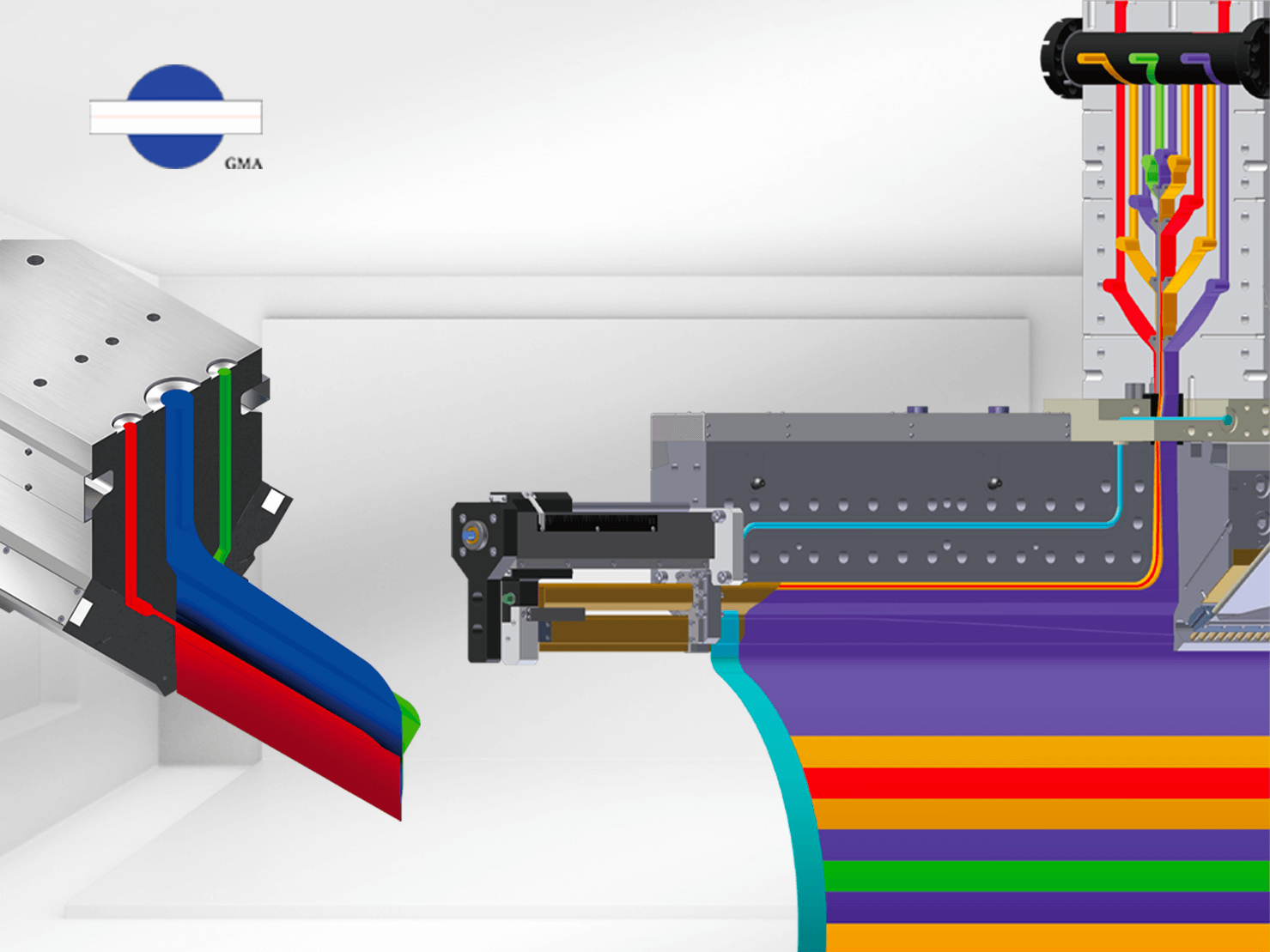
Whether in extrusion or coating lines, what we can see is only the raw material before processing. Once the material enters the production line, it undergoes melting, mixing, and other processes within enclosed mechanical structures. These subtle changes cannot be directly observed through monitoring systems or the naked eye. Only when the plastic exits the die lip and takes shape can the result be seen. These unknown variables within enclosed environments are limitations for die users, and they are equally limitations for AI tools that specialize in optimizing and analyzing known parameters.
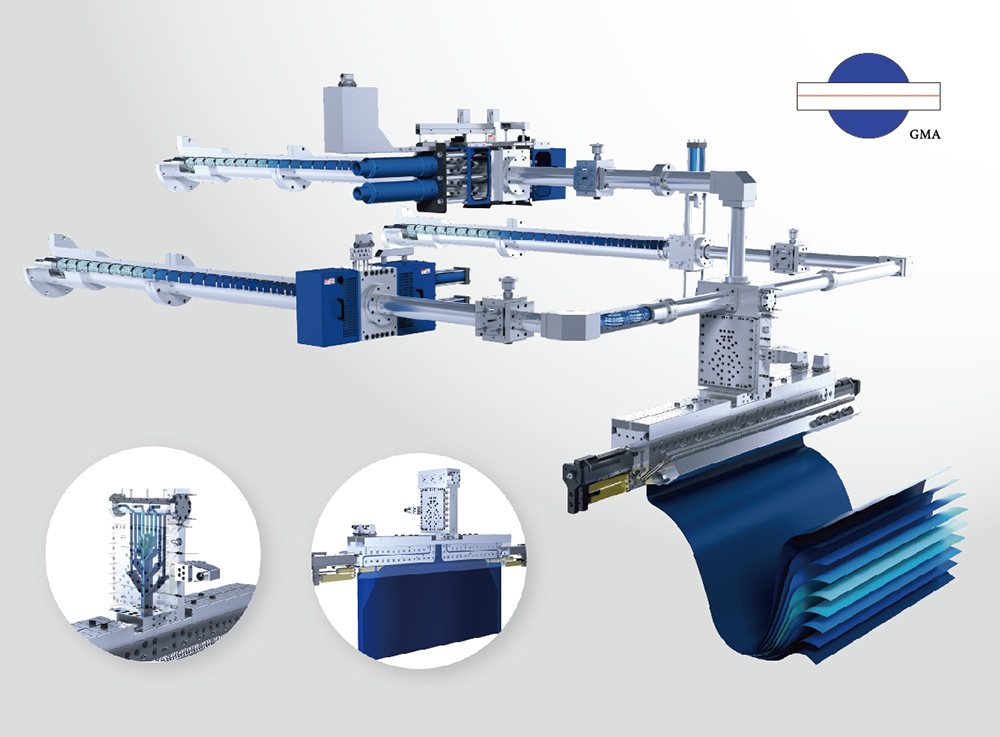 The
flow of plastic within enclosed mechanical structures may generate unknown
variables that cannot reveal subtle changes.
The
flow of plastic within enclosed mechanical structures may generate unknown
variables that cannot reveal subtle changes.
Read More: Say Goodbye to Guesswork: Industrial AI Makes Die Design Faster, More Accurate Stable
Humans have limitations in both knowledge and practical experience. AI tools excel at efficiently processing and integrating information, analyzing rules, helping people quickly identify key points, and reducing trial-and-error time. However, AI cannot replace the on-site judgment developed through practical experience. As a result, AI may misjudge or incorrectly speculate on the causes of die-related problems.
Misjudgments caused by the lack of practical experience during information processing can sometimes lead users to spend even more time searching for solutions. Therefore, when seeking solutions, databases and practical experience must complement each other. This is also why die users ultimately still rely on suppliers for technical support. The issue is not AI itself, but rather the fundamental limitations that any tool faces in certain production environments.
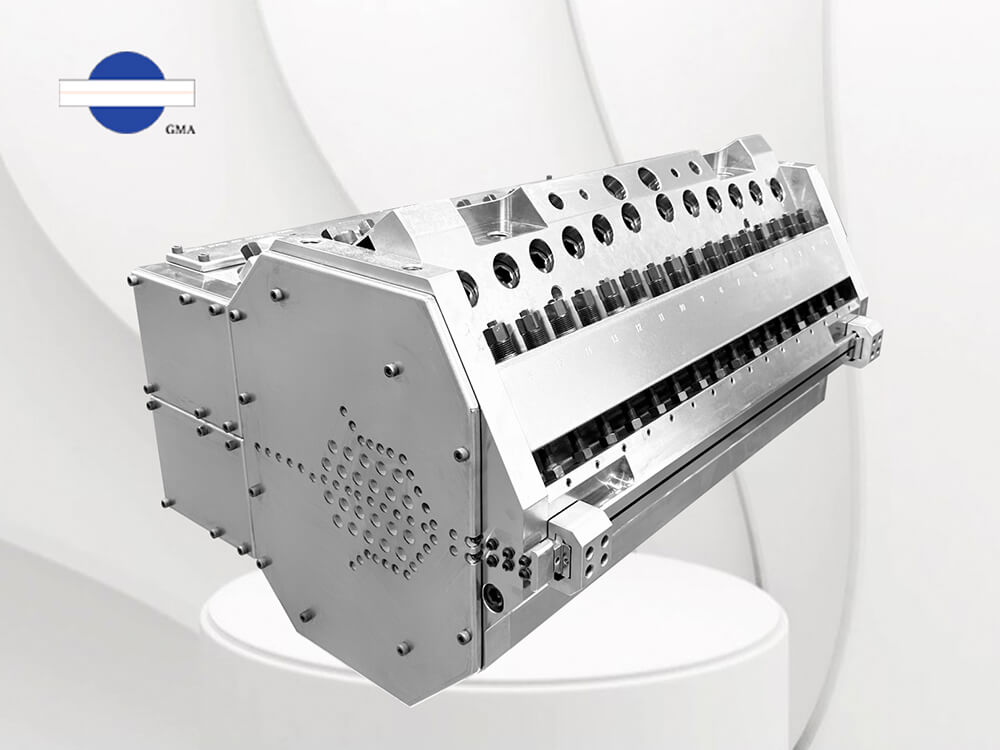
Extrusion dies are only one part of the extrusion process, they also play a critical role. Anyone with qualified machining experience can manufacture a die, but ensuring stable performance on a production line is an entirely different matter. When designing a die, all production-related factors—including risks such as product surface line, thickness variation, and product application requirements—must be considered. This is no longer merely an evaluation of design or manufacturing capability, but rather a comprehensive integration capability.
Read More: Innovation in Co-Extrusion Process: Multi Manifold Die
To provide a more specific example, even when the goal is simply to prevent lines on the product surface, the approach taken in die design and manufacturing will vary depending on the applications.
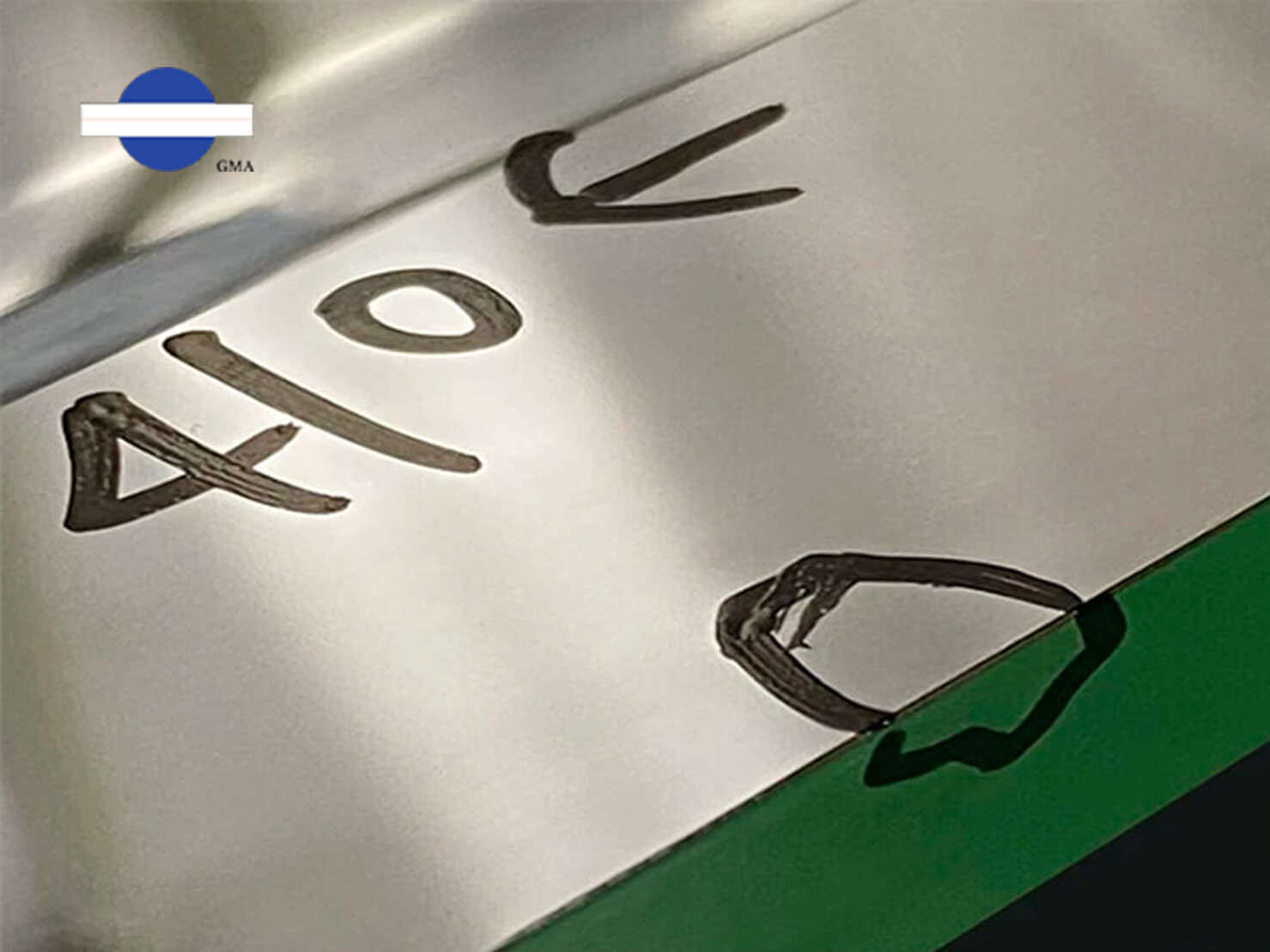
For optical sheet or film production lines, there is almost zero tolerance for lines, as they directly affect light transmittance and other performance characteristics. Therefore, particular attention is placed on the machining of the landing area. For lamination dies used in flexible packaging applications, the focus is often placed on the treatment and processing method of the die lips.
For slot dies used in pressure-sensitive adhesives, encapsulation films, lithium battery separators, and automotive protective films, whether the material is water-based or solvent-based, adjustments may even be required in the steel material selection and machining methods of the die itself. Particular emphasis is placed on die lip flatness, straightness, shim precision, and die lip land length. Both material selection and machining methods require continuous testing in order to determine the most suitable solution.
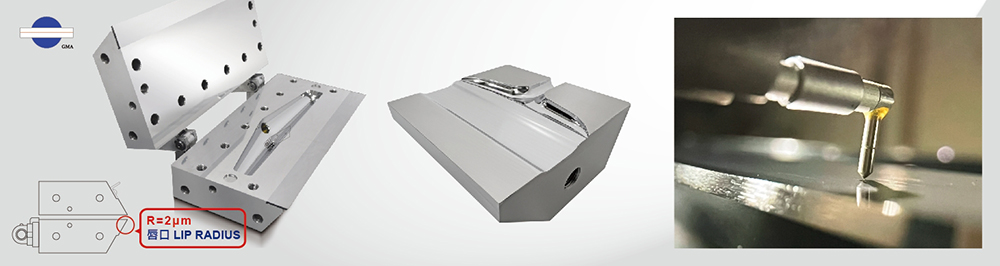 Die design and machining methods vary depending on
the application field.
Die design and machining methods vary depending on
the application field.
In today’s highly competitive market, companies are constantly developing new products or optimizing existing ones. How to achieve maximum development efficiency with minimal development cost has become a key challenge. Replacing the die is often considered the most direct solution by users.
However, in practice, many related factors must still be considered beyond simply replacing the die. This relies heavily on extensive troubleshooting experience and long-term accumulated judgment. This is precisely the core value of modern and future extrusion die manufacturers: whether they can help users shorten the distance between a problem occurring and finding the answer.
Read More: Should You Repair or Replace Your Die? A Four-Step Decision Guide to Eliminate Uncertainty