



Should You Repair or Replace Your Die? A Four-Step Decision Guide to Eliminate Uncertainty
2026.04.30Die Lifecycle
For those who drive regularly, this dilemma is all too familiar:“Should I repair my car or replace it?” There is never a standard answer—it depends on factors such as repair frequency, cost, and risk.
Similarly, we are often asked by customers: “Should we repair the die or replace it?” Especially in times of economic uncertainty, many companies take a more cautious approach toward investing in new equipment. As a result, deciding whether to repair or replace a die becomes a difficult judgment call.
In reality, just like deciding between repairing or replacing a car, there is no single correct answer—it requires a comprehensive evaluation.
So, how should you make this decision?
Proper Daily Maintenance Gives You a Clear Basis for Evaluating
Die Condition
The average service life of an extrusion die is around ten years. With proper operation and regular maintenance, it is not uncommon for a die to last up to twenty years while still maintaining stable performance.
On the other hand, we have also seen dies that were only eight years old but required frequent part replacements—even having their die lips replaced three times.
The key difference lies in daily maintenance. These maintenance practices are actually quite simple. By following a few essential principles, you can effectively extend the lifespan of your die while reducing the frequency of repairs.
Read More: Do you know 5 Key Points of Extrusion Die Repair & Maintenance to Extend Die Lifetime
We once encountered a case where a user did not know how to properly disassemble the die for cleaning, resulting in the die not being thoroughly cleaned for eight years. Even though they were processing materials with excellent flow properties, the lack of proper maintenance led to material residue accumulating inside the die cavity.
This caused longer heating times and made it easier for material to stick at the die lip, resulting in frequent cleaning of the lip. Improper cleaning methods then caused damage to the die lip, which had to be replaced three times. At the same time, surface lines on the product became increasingly noticeable, and yield rates dropped, ultimately affecting market competitiveness.
With the assistance of professional technicians, the die was finally disassembled for cleaning and inspection. It was found that the internal plating had severely worn in multiple areas, and the base steel had already shown signs of damage. Although the die could still be used for production, both its functionality and product quality were compromised.
In fact, daily maintenance provides a clear and reliable basis for evaluating the condition of your die.
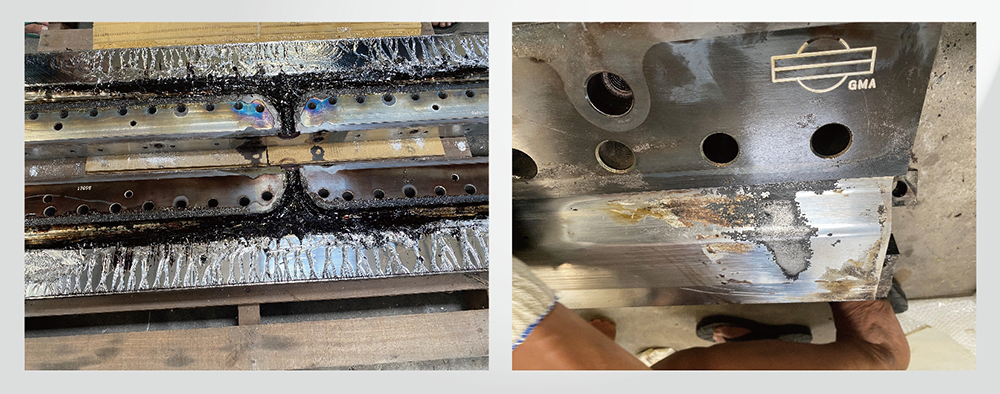
Failure to disassemble and clean the die over many years led to a significant buildup of residual material inside the die cavity, even causing parts of the steel to be corroded by the plastic.
Die repair is a discipline that requires both expertise and experience.
Not every die manufacturer has the capability to repair dies—just as repairing a car and manufacturing a car are two entirely different things. Manufacturing follows a structured process with all materials prepared in advance, whereas repair involves restoring functionality under limited time and material constraints.
Choosing the wrong repair vendor may not only worsen the damage but also lead to higher costs. Therefore, when selecting a qualified repair supplier, the following criteria can serve as useful references:
1.Understanding of die design
The supplier should be able to accurately identify the root cause of the damage—
whether it originates from manufacturing, operational misuse, or design issues.
Different causes require different solutions.
2.Complete machining capability and chrome plating expertise
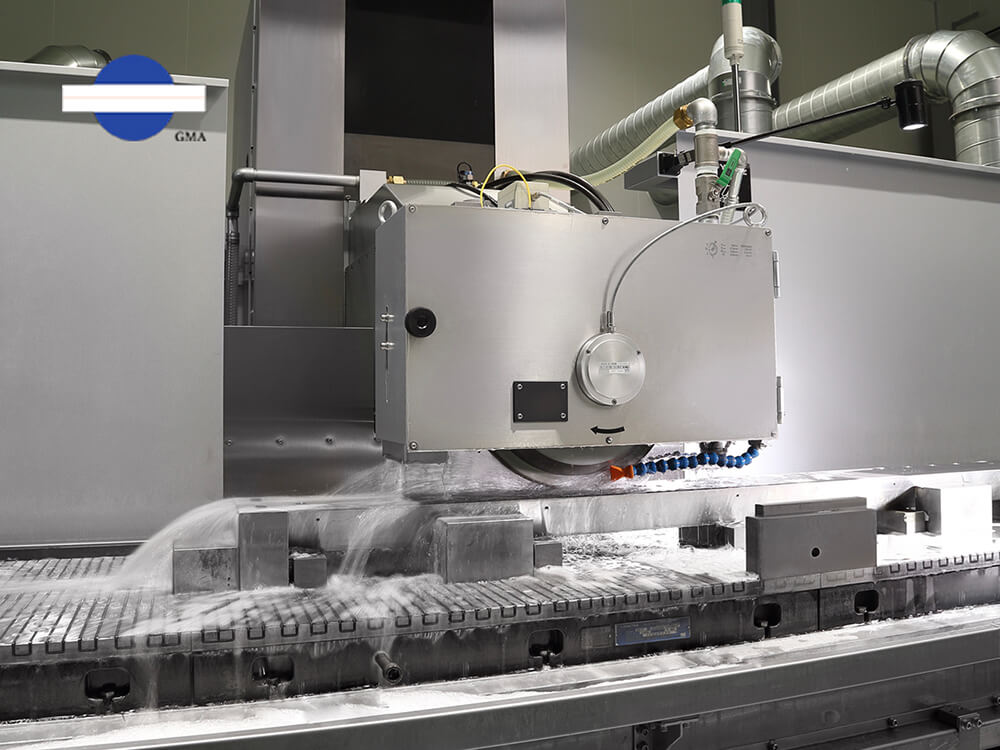
Die repair relies heavily on precision machining and surface treatment. To ensure consistent quality and clear responsibility, it is preferable for a single supplier to handle the entire repair process.
3.Ability to maintain original surface roughness and precision after repair
Even after repair, both parties should agree on inspection standards. If the surface roughness deviates from the original specification, it may cause flow variations and lead to further issues.
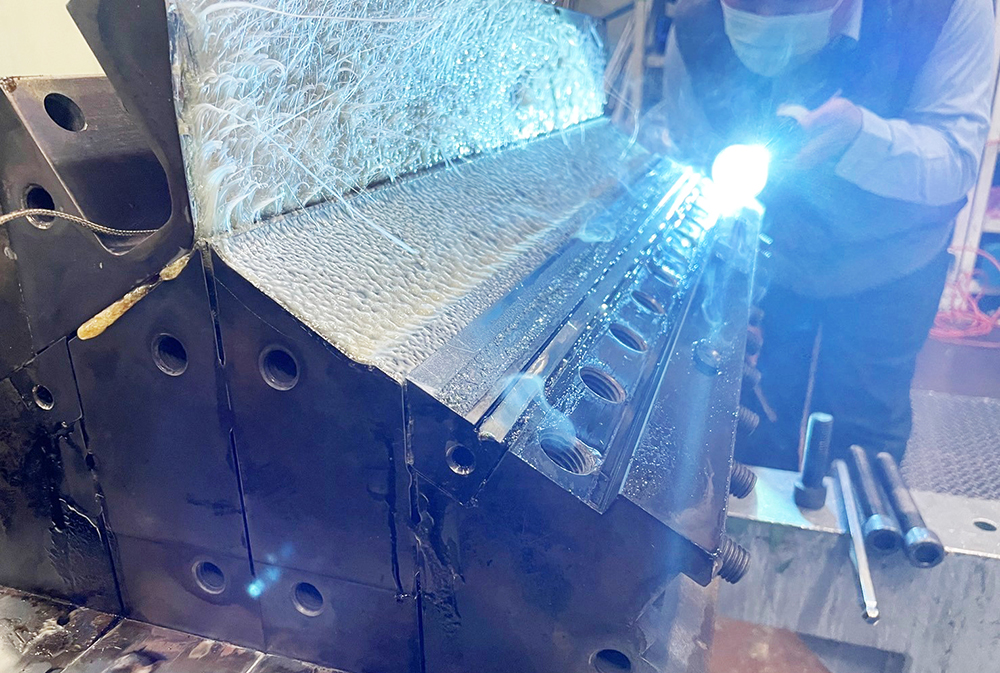
Whether the correct cause of die damage can be accurately identified determines whether an appropriate solution can be found.
While repair can certainly extend the service life of a die, not all types of damage can be resolved through repair. The following conditions are generally suitable for die repair:
1.Minor surface scratches or wear, with no damage to the internal flow channel structure.
2.No significant chemical corrosion or excessive carbonized buildup affecting the steel.
3.The die has not exceeded half of its average service life; beyond that point, further evaluation is required.
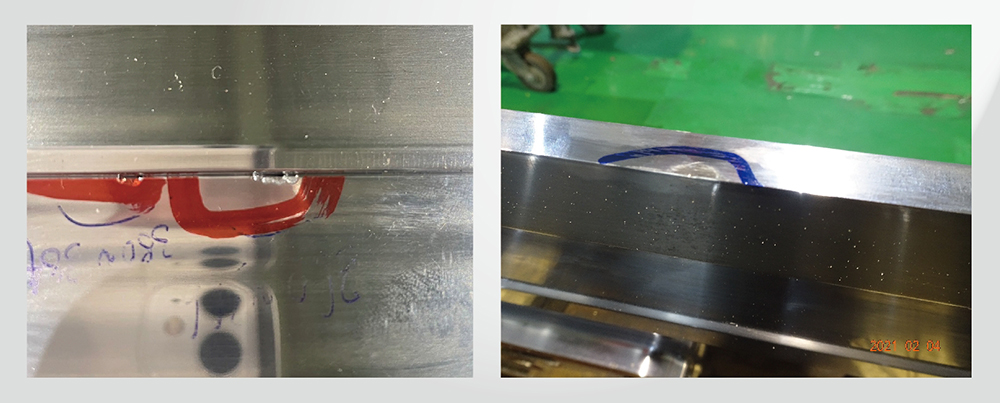
Localized or small-area damage can generally be addressed through repair.
Repair is a solution—not a cure-all.
In practice, we often encounter situations that cannot be resolved through repair:
If your die continues to show frequent plastic carbonization even after cleaning or repair—without any change in material—it is typically a sign of a deeper issue. While a small amount of material buildup along the sides of the die is common and usually does not affect product quality, once this buildup begins to impact the product surface, it often indicates a mismatch between the flow channel design and the material being used.
In such cases, the root cause lies in an inadequate die flow channel design, which cannot be corrected through repair alone.
If your die frequently produces surface lines, and these cannot be eliminated—or quickly reappear—after cleaning and repair, it may indicate that the issue is not due to localized damage. Localized defects typically show noticeable improvement after repair.
However, if the problem is caused by long-term wear of the steel, resulting in changes to surface roughness and consequently variations in melt flow velocity, or if the steel has been corroded by the plastic (or its additives), the situation is different. In some cases, inherent defects in the steel itself may even lead to surface cracking.
These conditions go beyond what repair can effectively address.
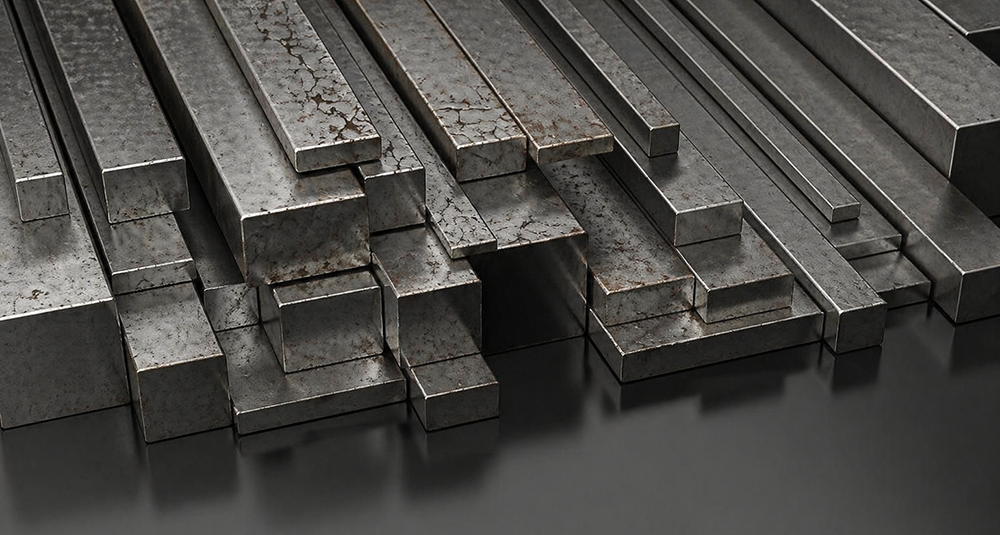
Defects inherent in the die steel itself cannot be resolved through repair.
If you notice gels repeatedly appearing, this is one of the most commonly misdiagnosed situations as a die-related issue. In reality, gels are generally not caused by the die, but rather by poor mixing performance in the extrusion system.
In practice, it is quite common for dies to be sent for repair due to this misjudgment, resulting in unnecessary repair costs and downtime. Even after reinstallation and repeated production trials, the problem often persists.
In the end, both time and money are wasted—without resolving the issue.
Read More: All extrusion die issue , let GMA help you.
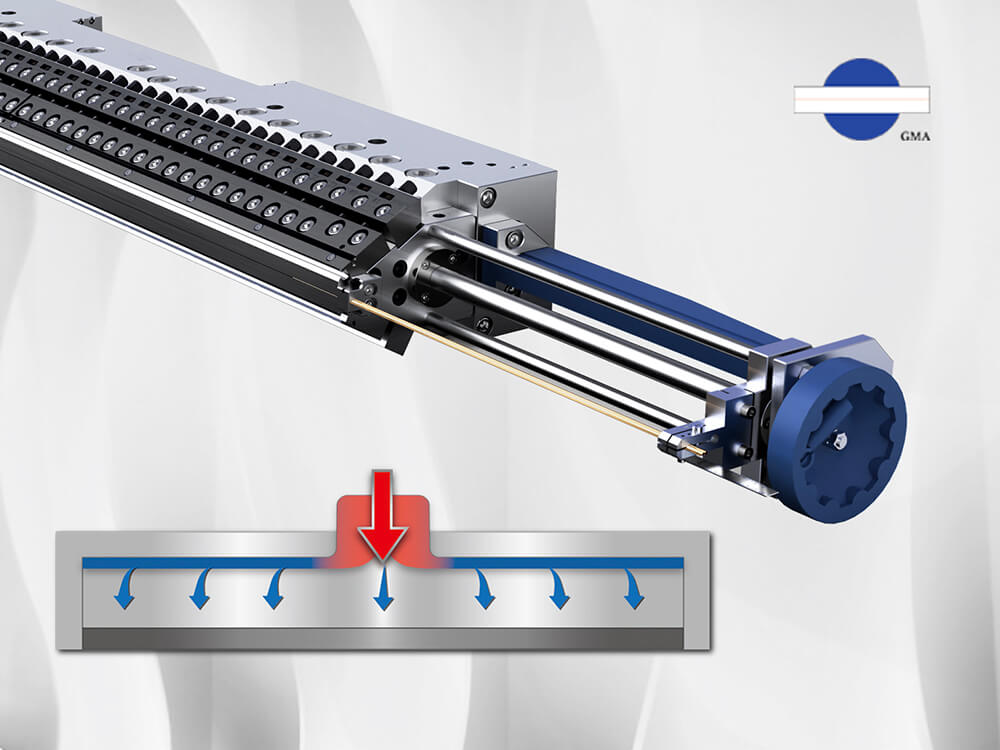
If your die shows an increasing frequency of thickness uniformity falling outside the acceptable range, and frequent adjustments of the die lip opening are required during production, this may indicate damage to the adjustment mechanism.
If the same issue persists even after replacing components, it suggests that the die body (die lip) has undergone irreversible deformation. This may be caused by factors such as mechanical fatigue (e.g., improper lip adjustment leading to localized stress concentration) or thermal fatigue (repeated heating and cooling over time).
When the issue originates from the steel itself, replacing the material is the only effective solution.
So, should the die be repaired or replaced? You can evaluate the decision step by step through the following process.
|
|
Decision Factor |
Purpose |
Evaluation Result |
|
1. |
Comprehensive inspection (by professionals or instruments), including die lip, flow channels, plating condition,adjustment mechanism, and heating system |
To identify damage that cannot be detected by visual inspection |
Local damage or replaceable components → Repair Severe damage → Replace |
|
2 |
Scope, method, and duration of repair |
To assess whether it exceeds the original or remaining value of the die, and whether it affects the production schedule |
Repair cost too high → Replace Production schedule impact → Use backup die or adjust schedule
|
|
3. |
Post-repair service life evaluation |
To assess whether functionality is sufficiently restored and whether product quality is affected |
If functionality cannot be restored to at least 80% → Replace |
|
4 |
Future changes in materials or product specifications |
To evaluate the likelihood of new products or new formulations |
If changes are expected in the short term (within 1–2 years) →Low cost → Repair Otherwise → Replace |
Under uncertain market conditions and budget constraints, some companies may choose an even more conservative approach—opting not to repair at all, and instead continuing to use the die as long as it is still marginally functional.
However, this often overlooks the hidden costs associated with poor die performance, such as declining yield rates, increasing scrap rates, higher energy consumption, and a greater risk of unplanned downtime—all of which can lead to even greater losses.
Therefore, the decision to repair or replace a die has no universal answer; it ultimately depends on how each company evaluates and balances these factors.