


Layer by Layer in a Drip Coffee Pouch: Extrusion, Lamination and Coating in Flexible Packaging
2026.09.01Coating & Slot Die
“However busy you are, there is always time for a coffee.” Coffee has become one of the most widely recognised drinks in the world — not only for its richness and variety, but because it is so easy to get hold of. Take an everyday drip coffee bag: besides the filter material that holds the grounds, there is the outer pouch — the flexible packaging that most people throw away without a second thought. Unremarkable as it looks, it has to be printable and it has to keep out air and moisture. It is not merely a stack of several materials; it is a stack of several different manufacturing processes.
 An
unremarkable-looking pouch — yet there is more to every layer than meets the
eye.
An
unremarkable-looking pouch — yet there is more to every layer than meets the
eye.
Three processes, and how they come together
A basic coffee pouch has five layers, from the outside in: PET film / adhesive / aluminium foil / adhesive / PE or CPP film. The outermost PET film carries the printing, and to meet printing requirements it may need surface treatment and orientation to improve both print quality and mechanical properties. The innermost layer, in contact with the food itself, is PE (cast or blown) or CPP (cast) film, which must seal reliably. In the middle sits the aluminium foil, the most important barrier layer, blocking air, moisture and light. Because the foil and the films on either side are dissimilar materials, they have to be joined by either extrusion lamination or coating. It is rather like building a mille-feuille: for the finished stack to be stable and even, every one of those processes has to control uniformity precisely — and that is exactly what a die does on an extrusion or coating line: control flat-sheet thickness uniformity with precision.
Read More: Exploring the Beauty of Processes: Differences and Applications of Lamination, Coating, and Bonding
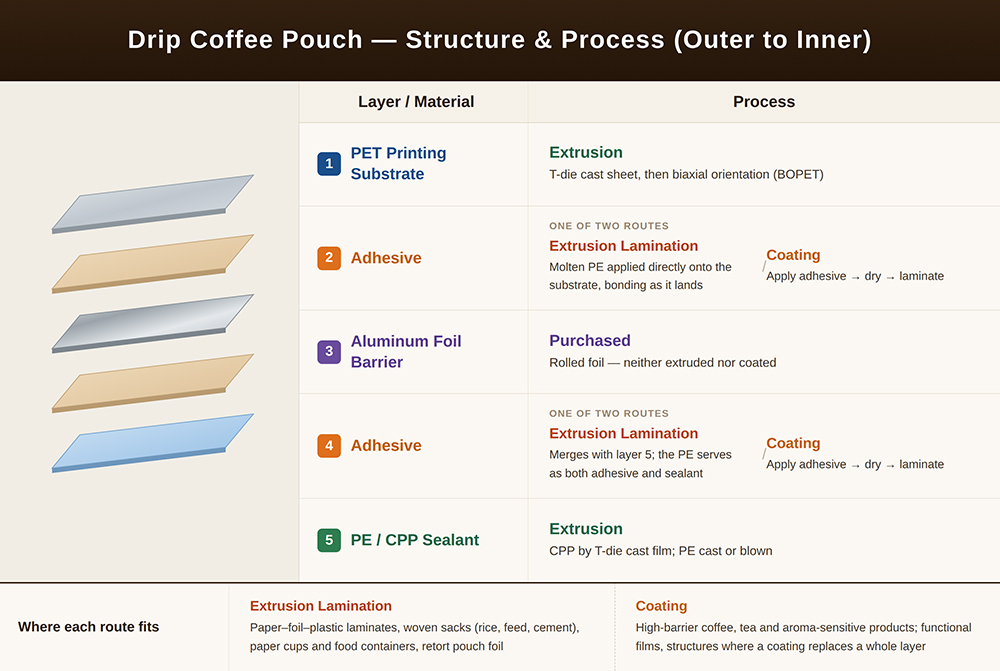
The structure of the pouch offers a glimpse of three different processes at work.
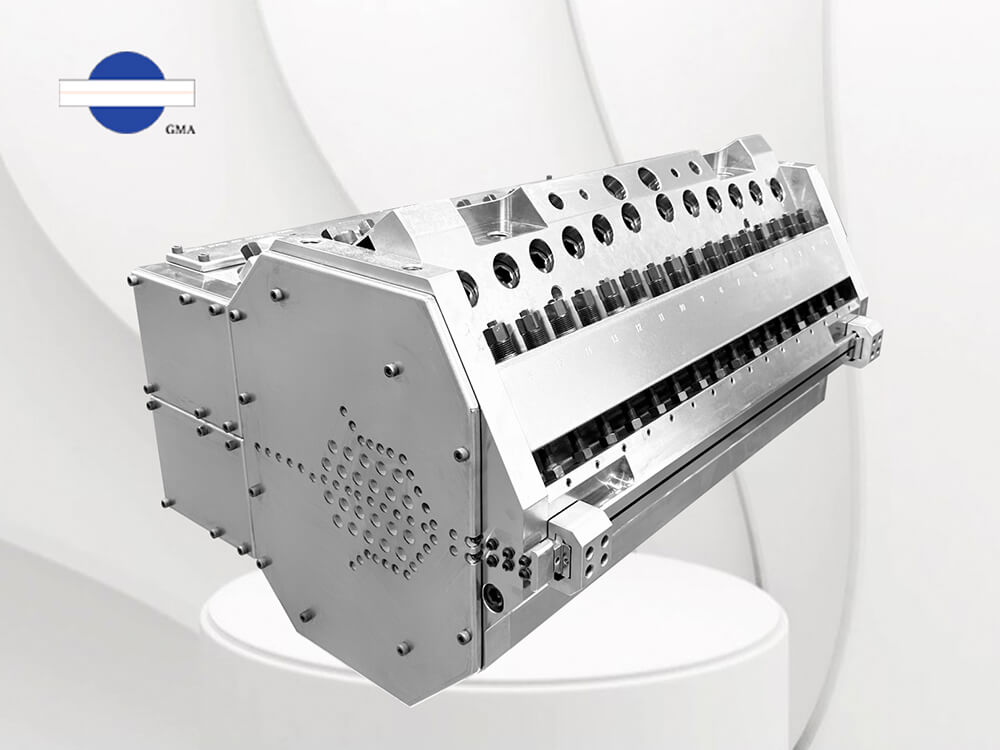
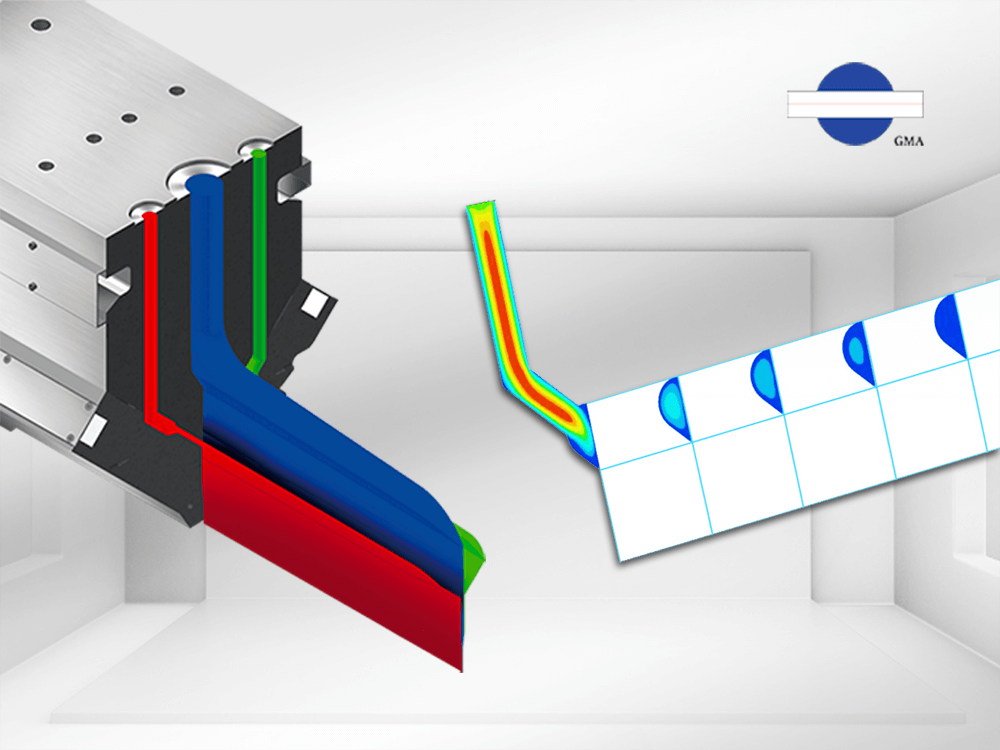
Whether it is film extrusion or extrusion lamination, an extrusion die controls the lip opening through lip adjustment bolts, and through internal manifold design and precision machining it keeps the melt flowing evenly at high temperature or high speed, so that thickness comes out uniform. That is why many film dies now use automatic control, both to save material and to allow fine adjustment. In flexible packaging, extrusion lamination often calls for different formulations on the two sides, so two dies are usually installed — one of them may run co-extrusion, or both may run a single resin.
Read More: Extrusion Lamination Die Design for LDPE, EVA, PP & PLA: A Complete Material Guide
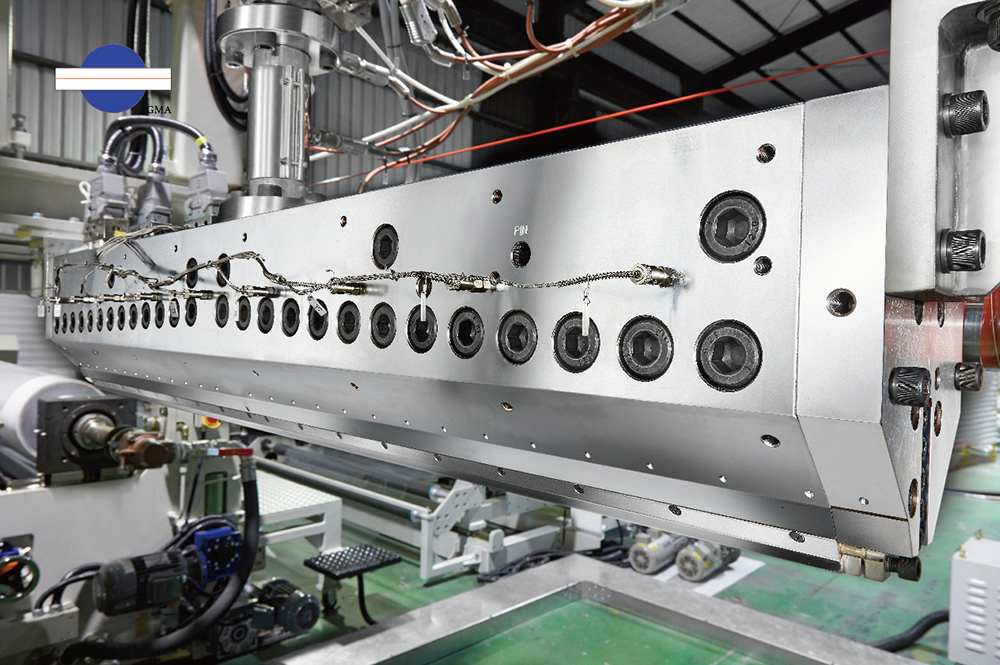
Extrusion dies achieve even flow and uniform thickness through manifold design and lip adjustment bolts.
Uneven coating, or coating that will not go on at all?
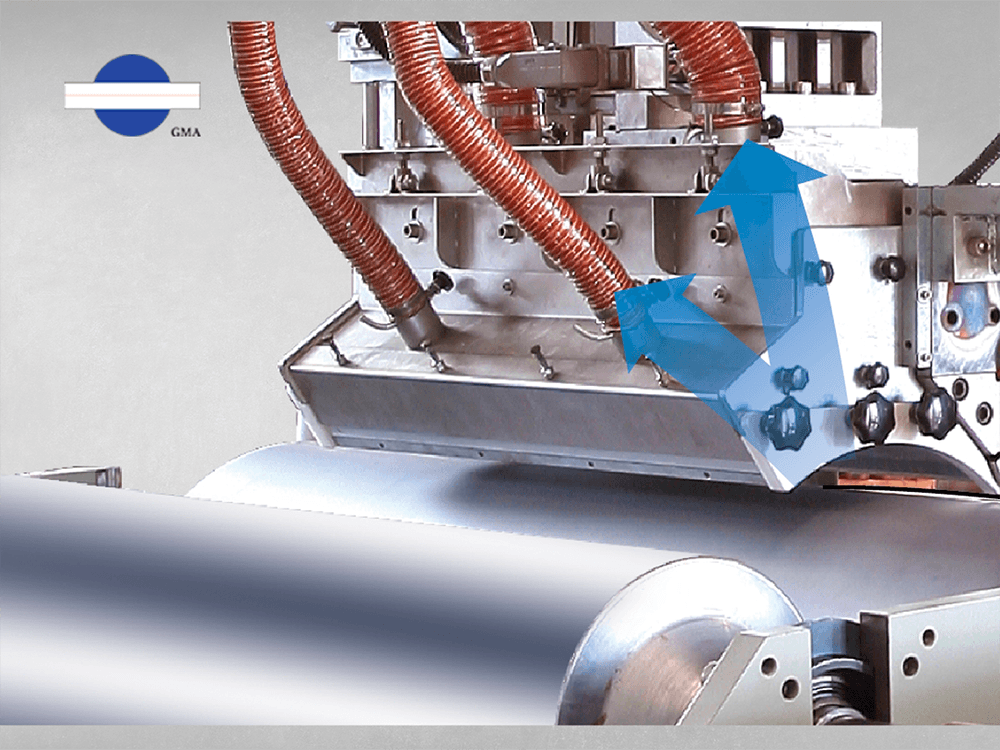
Coating, by contrast, uses different methods depending on the properties of the adhesive — slot die, comma roll and micro-gravure — each with its own way of keeping the coat weight uniform.
|
|
Comma roll |
Micro-gravure |
Slot die |
|
How coat weight is set |
Gap between blade and coating roll |
Cell volume of the engraved roll |
Pump flow rate |
|
Metering type |
Post-metered |
Post-metered |
Pre-metered |
|
Changing coat weight |
Adjust the gap (continuous, no stopping) |
Change the roll (coarse) + speed ratio (fine) |
Change pump speed — digital, repeatable |
|
Coat weight range (reference) |
5–50+ g/m² |
0.5–5 g/m² |
Wide; designed to requirement |
|
Source of precision |
Mechanical gap accuracy |
Consistency of the engraving |
Flow control accuracy |
|
Typical uses |
Adhesives, release coatings, thick barrier layers |
Primer, thin functional layers |
High precision, costly materials, R&D |
For the coating process, the die and the supply pump can meter the delivered volume precisely, so in theory the coat weight should be uniform. In practice the substrate itself can still change the result — uneven thickness, poor compatibility with the adhesive, or the absence of a necessary surface treatment. If the substrate’s surface energy is too low, the adhesive contracts into spots or forms fish eyes; this is particularly common on PE and CPP films, which is why they are treated before they leave the film plant. Slip additives are another factor: they are often compounded into the base film, and as the effect of the surface treatment decays over time, the slip agent also migrates to the surface and covers the treated layer again. So a film that has been in storage for a while may simply refuse to take the adhesive — and at that point, raising or lowering the coat weight makes no difference, because the problem is neither the delivered volume nor its uniformity. The adhesive is not staying on the surface at all.
In practice, if the adhesive will not go on, do not rush to adjust the coat weight — check the substrate surface first. If the coat weight is uneven, that is when to look at the coating die or the coating gap.
The same applies to extrusion lamination: the condition of the substrate affects the result there too. Uneven substrate thickness, for example, easily leads to uneven bond strength, so the laminated layer may delaminate or trap bubbles.
Substrate condition and what shows up after coating or lamination
|
Substrate condition |
What shows up after coating or lamination |
|
Low surface energy (inherent to polyolefins; treatment decaying over time; slip agent migrating to the surface) |
Coating: craters, fish eyes, spotting, edge withdrawal Lamination: poor adhesion, delamination |
|
Surface contamination (oil, dust, roller residue, release agent left from an earlier process) |
Local non-wetting, spot defects |
|
Uneven thickness (across the web) |
Finished thickness measures uneven; light and dark banding; baggy edges; gauge bands in the wound roll |
|
Poor flatness, residual internal stress |
Warping and curl after lamination, local wrinkling |
|
Moisture content (nylon and paper substrates) |
Blistering during lamination, poor adhesion |
Read More: Slot Die Coating: How It Works, Key Advantages & Industry Applications
Beyond the coating method itself, whether the adhesive is water-based or solvent-based also shapes how the whole line is designed and run. Water-based adhesives have a far higher latent heat of evaporation than solvent-based ones, so with the same oven length the line speed has to come down. Solventless lamination, which has been gaining ground in recent years, removes the drying stage altogether — and because that stage is gone and the adhesive layer is thinner, the demand on coating uniformity is correspondingly higher. In other words, choosing an adhesive system is not only a question of cost; it is bound up with the equipment configuration you need in order to achieve uniform coating.
Next time you tear open one of those drip coffee pouches that usually goes straight into the bin, take a look at it. Is each layer stiff enough, does it seal well, is the thickness even? Every layer is a different process on display — film extrusion, extrusion lamination or coating. Precision lies in the die; value lies in the film.