


Functional Films: Materials Define the Process, and the Process Defines Your Competitive Position
2026.03.26Materials & Applications
Smartphones have become an indispensable part of modern life. Does your screen also have a scratch-resistant or privacy protection film applied? From snack packaging commonly found on supermarket shelves, to paper cups we use every day, food wrap for preservation, grease-resistant paper for fast food, medical patches, and thermal insulation films used in homes and vehicles—these products that we see and touch daily are collectively referred to as “functional films.”
In fact, “functional films” are not a specific product category. Rather, they represent a processing approach developed to meet real application needs. They can be seen as a solution—one that integrates multiple technologies and equipment into a comprehensive result.
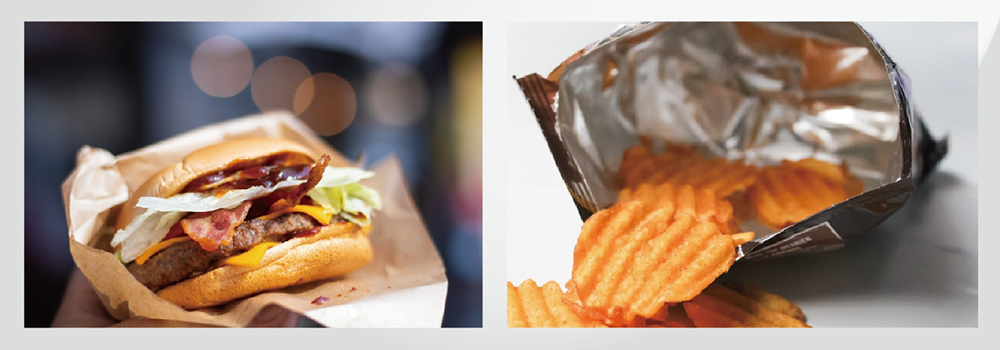
Products we see and touch every day can broadly be referred to as functional films. However, in reality, functional films are not simply a collection of products—they represent a solution.
Read More : Professionalism Is Worth the Wait: Insights into Die Design Philosophy and Value through Functional Films
Since “functional films” are essentially a solution—and involve different equipment and processing methods—how to choose the right equipment and process becomes another challenge for many.
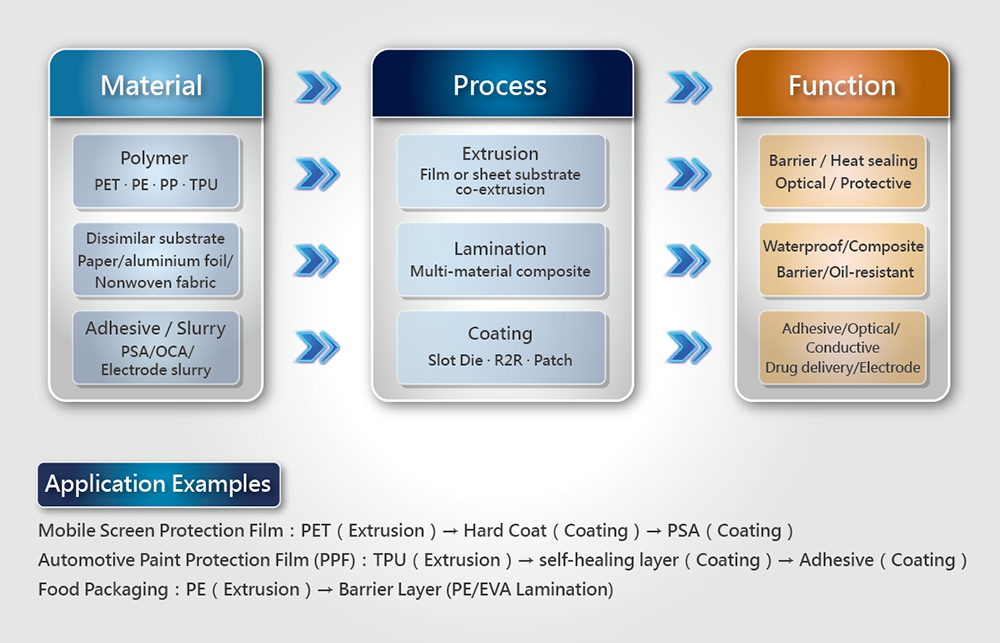
It can be evaluated from the following perspectives:
Simply put, the material determines the process, and the process defines the function.
Read More: Exploring the Beauty of Processes: Differences and Applications of Lamination, Coating, and Bonding
In summary, the existence of multiple processes and equipment is meant to address different functional film requirements.
Take the most common example—mobile screen protectors. To achieve scratch resistance on one side while allowing the other side to adhere to the screen without causing damage, the scratch-resistant surface must undergo a coating process (hard coat). Through coating and UV curing, the surface hardness of the original PET substrate (produced by extrusion) is enhanced, improving its wear resistance.
On the other side, a PSA adhesive is applied, enabling the film to firmly adhere to the screen while still allowing easy removal without leaving residue.
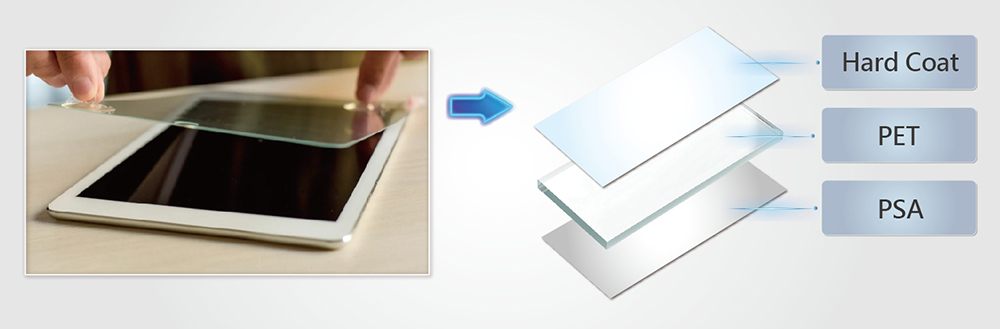
A seemingly simple mobile screen protector is, in fact, an integration of extrusion and coating processes.
Another widely recognized example is automotive paint protection film (PPF), This is also a product that integrates both extrusion and coating processes.
Using specially formulated TPU materials, the film is first produced through extrusion to achieve uniform thickness and high transparency. Since extrusion lines operate continuously and can produce wide widths, this process significantly enhances both production capacity and product consistency for TPU films.
However, a TPU film alone cannot meet practical application requirements. PPF is used to cover the entire vehicle body to protect it from damage and extend the lifespan of the paint. Therefore, the extruded TPU film must undergo additional coating processes. Similar to mobile screen protectors, the surface needs to be scratch-resistant and capable of withstanding environmental changes. The side that contacts the vehicle must also allow for clean removal without leaving adhesive residue.
In addition, PPF has an even more demanding requirement—self-healing capability. This means that minor surface scratches can be repaired through the material properties and processing design, effectively extending the product’s service life.
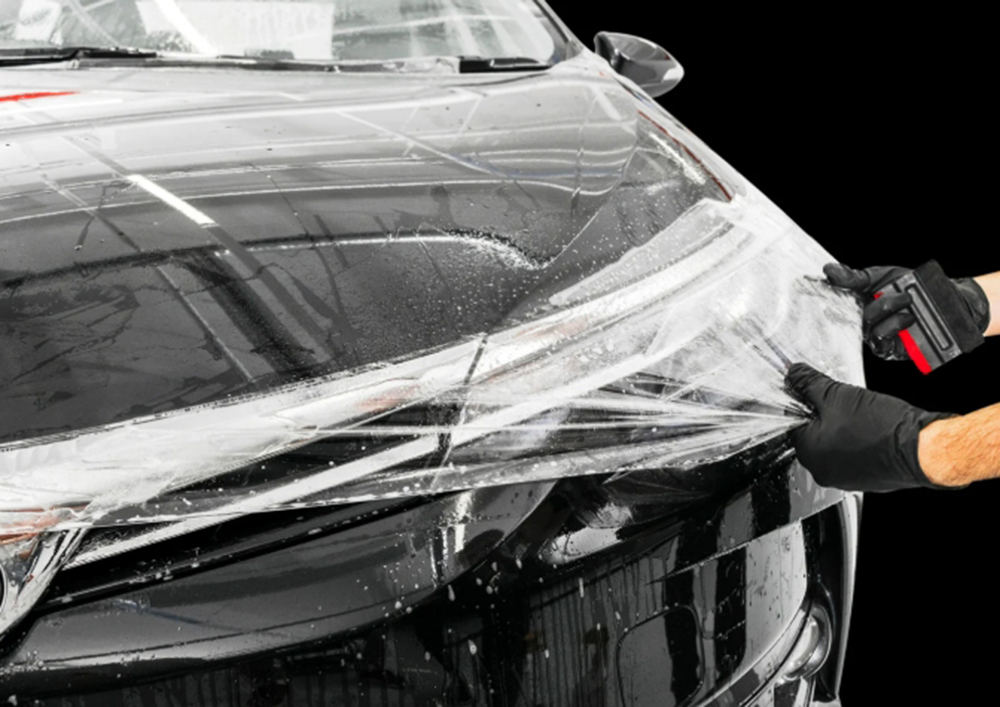
PPF represents the integration of high-end precision extrusion and precision coating. Leading brands, with their strong integration capabilities, are able to command prices several times higher than those of other competitors in the market.
Read More: Enhance PPF Quality: Focus on TPU Film Coating Production and Composition
Because functional films require the integration of multiple types of equipment, processes, and production technologies, manufacturers increasingly invest in different production lines to better control quality and enhance the competitiveness of the final product. As a result, market trends show a growing shift toward integrating multiple processes—also known as hybrid or composite processing.
The main reason this approach is becoming a trend is that the quality of the substrate determines the upper limit of the subsequent lamination or coating performance.
Take coating as an example: no matter how good the adhesive formulation or equipment is, if the substrate itself has thickness variations or minor defects such as streaks, these issues will be amplified after coating. The same principle applies to lamination processes. While this concept may seem straightforward, it is often a critical blind spot for many when operating coating or lamination lines.
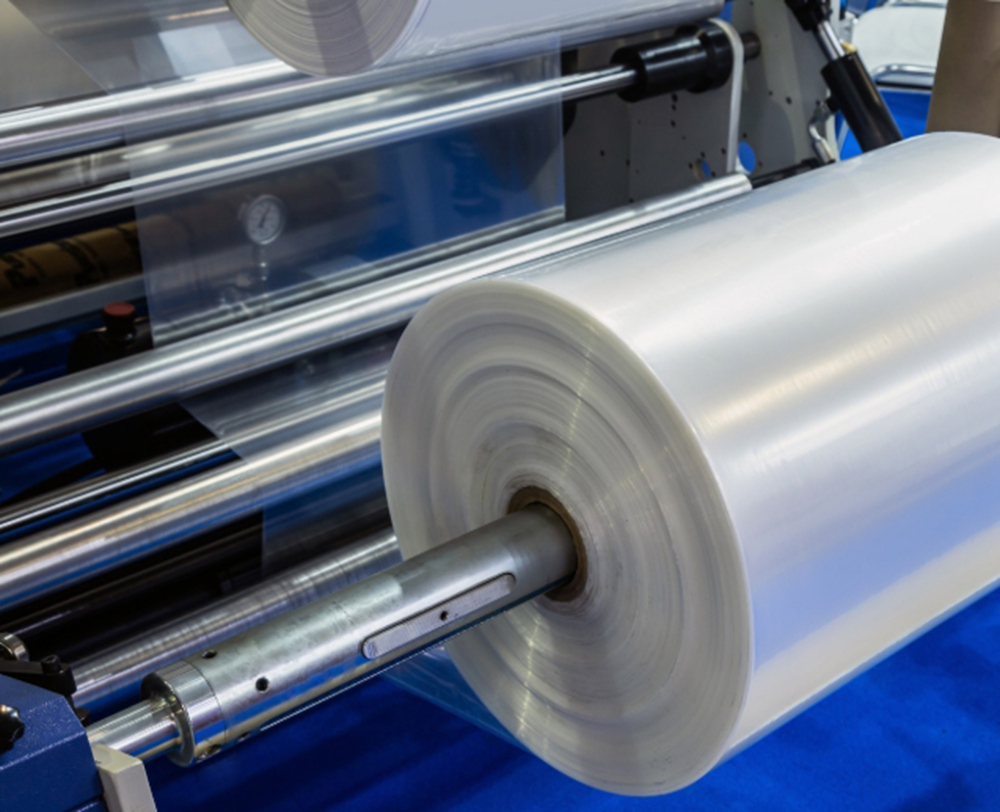
The substrate determines the quality level of subsequent processes, which is why more and more manufacturers are integrating their production lines.
In the past, film extrusion manufacturers focused on producing substrates, while coating companies were responsible for functional layers. However, as market demands for product performance become more complex and diversified, the limitations of this clearly divided model have gradually emerged.
One of the most common issues is the attribution of quality responsibility—whether a defect is caused by the substrate or the coating is often difficult to determine. This is precisely why, as mentioned earlier, automotive paint protection films have evolved toward integrating extrusion and coating lines, in order to reduce such quality risks.
Another frequent point of contention lies in substrate specifications. Factors such as thickness tolerance, winding tension, and edge uniformity all have a direct impact on the coating process. However, it is often difficult to strictly standardize these parameters across substrate suppliers. This has become one of the main causes of inconsistent coating quality, and aligning specification requirements typically requires significant time and effort.
What matters most to everyone is market competitiveness. The demand cycle for new products can be very short, so the ability to adjust processes quickly to meet market needs directly determines competitiveness. However, without integrated production lines, it is often difficult to maintain alignment across processes, making it easier to miss market opportunities.
For most manufacturers, the greatest benefits of integration include:
Consistency
in quality control:
From the substrate to lamination or coating, quality and specifications can be
fully controlled throughout the entire process. This approach is most commonly
seen in the optical film industry. By producing PET optical substrates through
extrusion and then applying coating processes, manufacturers can achieve
functional layers such as anti-scratch, anti-reflection, and
anti-glare—significantly improving the yield of optical films.
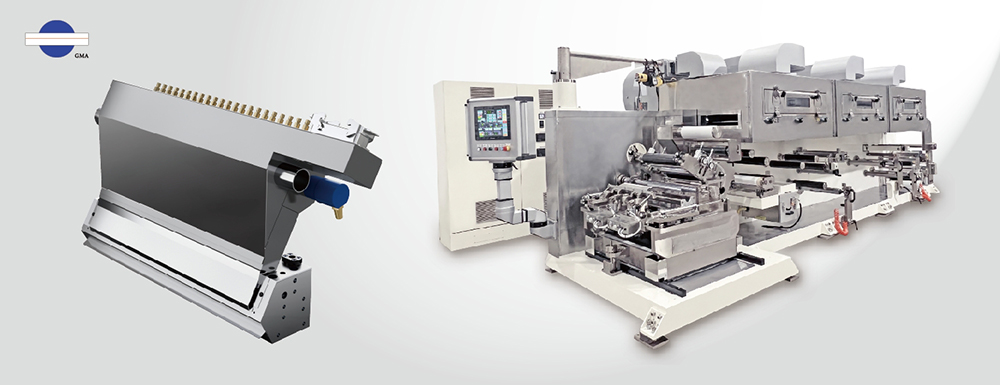
The integration of extrusion and coating equipment significantly improves the yield of optical functional films.
Cost efficiency:
Although integration requires a higher initial investment in equipment, once completed, it can significantly reduce procurement, logistics, and production costs. For products with high market demand (large volume and standardized specifications), such as optical films or battery electrodes, this creates a strong cost advantage.
For example, in food packaging films, co-extrusion often uses PE or PP, while lamination may also use PE or EVA. Using the same or similar polymers helps reduce overall material costs.
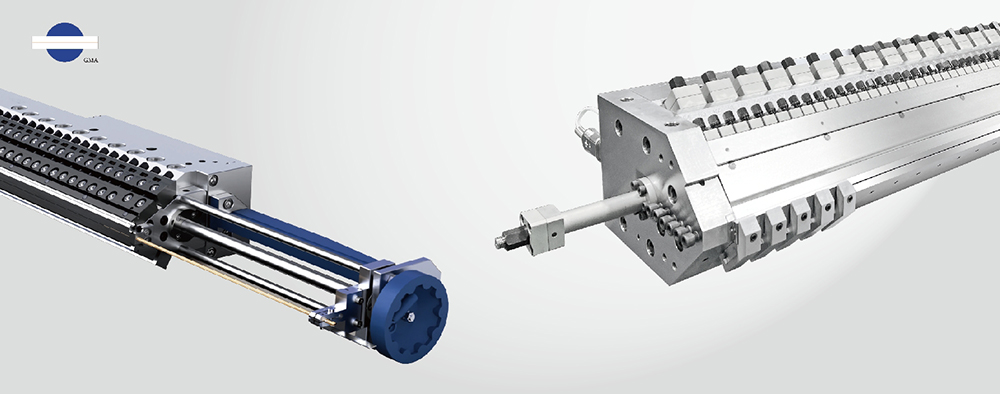
The integration of extrusion and lamination processes can effectively reduce raw material costs.
Formulation flexibility
Functional films integrate multiple technologies, and material compatibility between layers is a critical factor. Once production lines are integrated, it becomes much easier and faster to adjust material formulations across processes.
For example, when both the extrusion substrate and coating processes are handled by the same team, if insufficient coating adhesion is observed, adjustments can be made simultaneously from both the substrate formulation and coating parameters. This eliminates the need for back-and-forth communication between different suppliers to determine responsibility. Such cross-process coordination is often the key to achieving target performance quickly and shortening development cycles.